
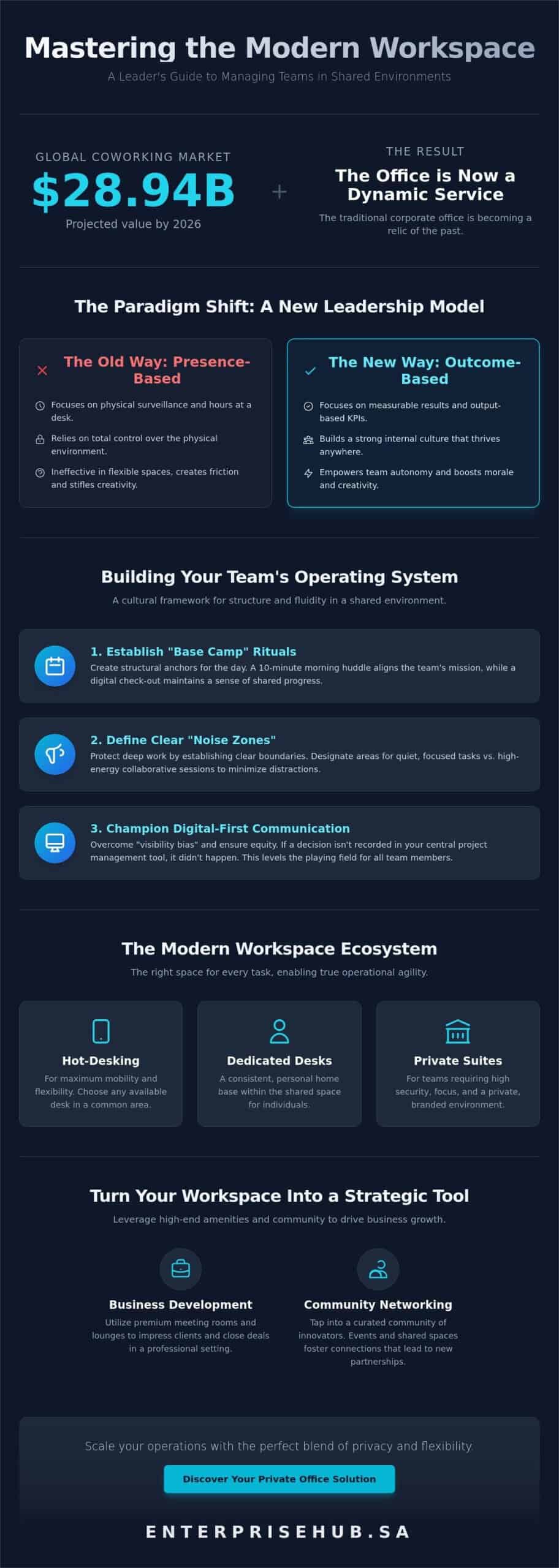
With the global coworking market reaching a staggering $28.94 billion in 2026, the traditional corporate office is quickly becoming a relic of the past. You’ve likely felt the specific friction of this shift, perhaps worrying that your unique company culture is dissolving into the background noise of a communal lounge or that constant distractions are sabotaging your team’s deep work. It’s a common concern for leaders who feel they’ve lost control over their physical environment. However, the lack of private walls doesn’t have to mean a loss of discipline or identity.
This strategic guide promises to help you master managing a team in a shared workspace by architecting rituals that protect productivity while leveraging high-end amenities to slash overhead. We’ll show you how to build a high-performing team that actually loves their environment. You’ll learn to navigate the latest 2026 OSHA safety compliance rules for flexible workers and establish clear boundaries between collaborative energy and quiet focus. We’re moving beyond simple desk management to help you lead a sophisticated, distributed workforce that thrives on flexibility without sacrificing professional standards.
Key Takeaways
- Shift your management focus from monitoring physical presence to outcome-based leadership to ensure high performance across distributed teams.
- Implement “Base Camp” rituals that are critical for managing a team in a shared workspace while keeping your unique company culture intact.
- Define clear “noise zones” within the office to protect deep work and minimize the impact of daily distractions on productivity.
- Utilize premium amenities and community networking events to turn your workspace into a strategic tool for business development and client acquisition.
- Scale your operations efficiently by combining the privacy of dedicated suites with the flexibility of professional shared services.
The Hybrid Paradigm: Why Managing a Team in a Shared Workspace Requires a New Strategy
By 2026, the definition of an “office” has shifted from a static physical location to a dynamic service. Modern workspaces are no longer just open floors with desks; they’re sophisticated ecosystems blending high-end private suites with premium communal amenities. This evolution demands a fundamental change in leadership. Traditional “presence-based” management, where success is measured by seeing people in their chairs at 9:00 AM, is ineffective in these flexible environments. Instead, high-performance leaders have transitioned to outcome-based leadership, focusing on measurable results rather than physical surveillance.
Traditional management styles often fail in shared environments because they rely on total environmental control. When you share a building with other innovative companies, you can’t dictate every noise or interaction. Trying to micromanage your team’s physical movements in such a space creates friction and kills the very creativity the environment is designed to foster. Managing a team in a shared workspace effectively requires you to build an internal culture so strong that it remains intact regardless of who is sitting at the next table. This variety of workspaces actually boosts employee morale, as it gives individuals the autonomy to choose the environment that best suits their current task, whether it’s a social lounge for brainstorming or a quiet corner for deep analysis.
Understanding the Modern Flexible Ecosystem
To lead effectively, you must understand the tools at your disposal. The ecosystem includes hot-desking for maximum mobility, dedicated desks for a consistent home base, and private serviced offices for teams requiring high levels of security and focus. To grasp what is a shared workspace in the current market, one must view it through the “third space” lens. This concept bridges the gap between the isolation of a home office and the rigidity of a traditional corporate headquarters. The modern workspace is a strategic tool for operational agility that allows businesses to scale without the weight of long-term liabilities.
The Manager’s New Role: Curator of Experience
Your role has evolved from an overseer to a facilitator. You’re now a curator of your team’s work experience. This means identifying when your team needs the high-energy buzz of a communal lounge to spark new ideas and when they must retreat to a private suite for confidential strategy sessions. A critical challenge in managing a team in a shared workspace is overcoming “visibility bias.” It’s easy to accidentally favor team members you see most often in the common areas. You must intentionally create digital-first communication channels to ensure that every contributor, whether they’re in a private booth or a shared lounge, feels equally empowered and recognized. By focusing on experience rather than just attendance, you transform the workspace into a catalyst for growth.
Building Your Team’s Operating System for Shared Environments
Managing a team in a shared workspace requires more than just a floor plan; it demands a cultural “Operating System” designed for fluidity. Without a clear framework, teams can quickly feel unmoored in a sea of communal activity. You must establish “Base Camp” rituals to provide structural anchors. Start the day with a focused, ten-minute huddle in a consistent location, perhaps a reserved corner of the lounge or your dedicated private office. This ritual signals the transition from individual commute to collective mission, ensuring everyone is aligned before they disperse to their respective focus zones. Ending the day with a quick digital “check-out” post can also help maintain a sense of shared progress.
Successful leaders in 2026 have abandoned the surveillance of desk hours in favor of rigorous, output-based KPIs. This shift is essential when navigating the hybrid split, where some members are present in the hub while others work remotely. To maintain equity, you need a new strategy for hybrid work that prioritizes digital-first communication. If a decision isn’t recorded in your project management tool, it didn’t happen. This approach prevents “hallway decision-making” from isolating remote contributors and keeps the entire team synchronized regardless of their physical coordinates. Managing a team in a shared workspace effectively means ensuring that being “in the room” doesn’t provide an unfair professional advantage over those working elsewhere.
Step 1: Define Your Communication Protocols
Shared environments are ripe for “desk-bombing,” where spontaneous questions derail deep work. To prevent this, enforce digital-first protocols for non-urgent inquiries. Use asynchronous tools to keep conversations organized and searchable. You should also establish visual cues for “Do Not Disturb” modes that work in communal settings. For instance, wearing noise-canceling headphones can signal a total focus block, while an open laptop in the lounge suggests availability for quick collaboration. Setting specific “heads-down” hours for the entire team ensures that everyone has protected time for complex tasks without the fear of interruption.
Step 2: Formalise Your Space Usage Rules
Create a “Space Playbook” that clearly outlines where specific tasks should occur. Phone booths are for short, high-intensity calls, while premium meeting rooms are reserved for client presentations and long-form strategy sessions. Open tables should be viewed as high-energy zones for creative brainstorming rather than permanent workstations. When hosting guests, always utilize the professional reception and lounge areas to maintain a high-standard brand image. The golden rule of shared workspace etiquette is simple: always treat communal resources with the same respect you would your own private equipment to ensure the environment remains a catalyst for everyone’s success.
Navigating Shared Workspace Etiquette: Balancing Collaboration and Deep Work
Effective leadership in a communal environment hinges on your ability to set and enforce clear social boundaries. Unlike a traditional office where you control the entire floor, managing a team in a shared workspace requires a nuanced understanding of “noise zones.” You must teach your team to distinguish between the Library Rule and the Coffee Shop Rule. In silent focus areas, the Library Rule applies: absolute silence and zero interruptions are the standard. In contrast, the lounge and kitchen areas follow the Coffee Shop Rule, where moderate chatter and spontaneous networking are encouraged. By clearly defining these behaviors, you prevent the friction that occurs when one team’s brainstorming session interrupts another company’s financial audit.
Respecting shared resources is the foundation of your professional reputation within the hub. This extends from ensuring the communal kitchen remains pristine to managing high-volume printing tasks during off-peak hours. As a manager, you are the primary role model for this behavior. If you leave your laptop unlocked or ignore a mess in the breakroom, your team will inevitably follow suit. Setting a high standard for hygiene and resource management isn’t just about politeness; it’s about maintaining the operational efficiency of the entire ecosystem. When your team is viewed as a respectful and organized unit, it opens doors for high-value networking and partnerships with other innovative businesses sharing the space.
Protecting Concentration and Confidentiality
Confidentiality remains a significant challenge in open environments. You must equip your team with tactical tools like privacy screens and noise-cancelling technology to safeguard sensitive data. For sensitive HR discussions or financial reviews, strictly enforce a “Phone Booth” protocol. Never allow these conversations to happen in open areas where they can be overheard by external parties. Additionally, implement a mandatory clean-desk policy. With the 2026 focus on digital security and data privacy, ensure no physical documents are left unattended and that all team members are aware of their responsibilities to protect company intellectual property in a shared world.
Cultivating a Professional Presence
Your team represents your brand every time they step into a communal area. While networking is a key benefit of coworking, you must manage team chatter to avoid disrupting the wider community. Encourage “strategic socializing” during community events rather than allowing it to bleed into productive hours. Managing a team in a shared workspace also involves ensuring your team maintains a professional appearance and demeanor that aligns with your company’s core values. This collective discipline doesn’t just protect productivity; it builds a formidable brand presence that attracts both top-tier talent and potential partners within the flexible ecosystem.
Maximising ROI: Using Premium Amenities to Drive Professional Growth
Transitioning to a flexible environment is often viewed through the lens of cost-saving, but the true value lies in how these spaces accelerate business growth. Managing a team in a shared workspace provides your business with immediate access to high-tier infrastructure that would typically require significant capital expenditure. By leveraging shared support services like professional reception, mail handling, and integrated IT, you can slash operational overhead while maintaining a prestigious corporate image. This shift allows you to redirect your financial resources toward core business activities and talent acquisition rather than office maintenance and utility management.
Brand perception is a critical component of ROI. A prestigious business address in a primary commercial district instantly elevates your standing with clients and top-tier recruits. In the 2026 talent market, professionals are increasingly drawn to companies that offer vibrant, amenity-rich environments. When you lead a team in a space that features wellness rooms, high-end lounges, and cutting-edge technology, you aren’t just providing a desk; you’re offering a lifestyle. This competitive edge in recruitment reduces long-term hiring costs and improves employee retention rates by providing a workspace that people actually want to visit.
Leveraging High-End Infrastructure
First impressions are non-negotiable when closing high-stakes deals. Utilizing professional meeting rooms for rent ensures that your board presentations and client negotiations happen in a controlled, sophisticated setting. These rooms come equipped with the latest audiovisual technology, removing the technical friction often found in traditional office setups. Furthermore, professional reception services ensure that your clients are greeted with the same level of hospitality they would expect from a global headquarters. This “plug-and-play” infrastructure, supported by on-site IT experts, minimizes downtime and ensures your team remains focused on high-value output.
Networking as a Growth Lever
The shared ecosystem serves as a built-in marketplace for business development. Encourage your team to engage with the wider hub community during organized events and in common areas. This informal “cross-pollination” of ideas often leads to finding potential partners, specialized vendors, or even new clients within the same building. Managing a team in a shared workspace effectively means viewing your neighbors not as distractions, but as a strategic network. By fostering these connections, you transform your office lease into a proactive growth engine that generates leads and collaborative opportunities. To see how these premium amenities can transform your operational efficiency, explore our private offices and shared solutions designed for modern enterprises.
The Enterprise Hub Advantage: Private Offices in a Shared Ecosystem
For organizations that require the highest levels of operational security, “Private Suites” offer the perfect equilibrium. You get the fortified privacy of a traditional corporate lease paired with the dynamic agility of a coworking ecosystem. Managing a team in a shared workspace is most effective when you have a dedicated “Base Camp” where your specific company culture can flourish without external distraction. Enterprise Hub serves as a strategic partner in this journey, assisting you from the initial business setup phase through every stage of international scaling. Whether you’re a lean startup or a multinational corporation, our customizable solutions ensure your workspace reflects your specific professional standards and national economic ambitions.
Aligning your physical presence with top-tier professional standards is no longer optional in a globalized market. By choosing a private office within a premium hub, you secure your team’s sensitive data and intellectual property while still enjoying the high-end amenities that drive employee satisfaction. This model allows leaders to focus on core business objectives while the hub handles the complexities of facility management. It’s a comprehensive approach that transforms the office from a fixed expense into a flexible asset that evolves alongside your business needs.
A Strategic Base for Modern Teams
Your office address is a direct reflection of your company’s ambition. Operating from a premium business district places your team at the heart of the national economic transformation, providing unparalleled access to major financial and business entities. This proximity creates a natural synergy that drives innovation and facilitates high-level networking. The flexibility to scale your footprint up or down in real-time ensures that your real estate costs always align with your current headcount. This adaptability is crucial for managing a team in a shared workspace during periods of rapid growth or market shifts, allowing you to remain agile without the burden of long-term liabilities.
Beyond the Desk: Comprehensive Support
We understand that high-growth firms need more than just four walls and a desk. By integrating government services, accounting support, and tax advisory into the workspace, we remove the administrative hurdles that often slow down expansion. While a private office allows your team to foster deep internal bonds, the surrounding shared areas remain available for innovation and cross-industry collaboration. This dual-layered approach is the gold standard for modern leadership. Ready to elevate your operations and empower your team? Book a tour of Enterprise Hub today and experience the future of professional work in Riyadh.
Leading the Next Generation of High-Performance Teams
The transition toward flexible environments is a strategic mandate for businesses aiming to thrive in 2026. Mastering the art of managing a team in a shared workspace requires a sophisticated blend of outcome-based leadership and the intentional use of premium infrastructure. By establishing clear spatial rituals and protecting your team’s deep focus while embracing the energy of communal zones, you create an environment where creativity and productivity coexist naturally. Success in this new paradigm depends on choosing a workspace that acts as a catalyst for your specific goals rather than a mere physical location.
Enterprise Hub provides the foundation for this growth with premium private offices located in a premier business district. We eliminate the friction of scaling by integrating comprehensive business setup and government service support directly into your ecosystem. With our state-of-the-art meeting rooms and high-speed infrastructure, your team has every tool needed to exceed the highest professional standards. Take the decisive step toward operational excellence and long-term agility. Secure your team’s future at Enterprise Hub today and lead with the confidence of a firm built for the future. Your journey toward sustainable growth starts with a workspace that empowers your vision.
Frequently Asked Questions
How do I ensure data privacy for my team in a shared workspace?
You ensure data privacy by implementing a mix of digital and physical security protocols. Require all team members to use encrypted VPNs and install physical privacy screens on laptops to prevent visual hacking. Establish a strict clean-desk policy where sensitive documents are never left unattended and are stored in secure on-site lockers at the end of each day.
What is the best way to handle loud phone calls without a private office?
Utilize soundproof phone booths for high-volume or sensitive calls to avoid disrupting the communal environment. If booths are occupied, move to high-activity lounge areas where moderate noise is expected rather than staying in quiet focus zones. This practice respects the concentration of others while ensuring your conversations remain professional and audible only to your intended audience.
Can a shared workspace accommodate a team that is growing rapidly?
Shared workspaces are specifically designed to support rapid scaling without the friction of traditional long-term leases. You can add dedicated desks or transition into a larger private suite almost instantly as your headcount increases. This flexibility allows you to align your real estate costs directly with your current team size, ensuring you never pay for unused square footage.
How do I maintain our company culture when we are surrounded by other brands?
Maintain your unique culture by anchoring your team with specific internal rituals and private sessions. Use your dedicated suite for core team-building activities and strategic meetings while using communal areas for external networking. This dual approach ensures your team feels a strong sense of internal identity while still benefiting from the innovative energy of the wider hub community.
Is it possible to have a dedicated desk or private area within a shared hub?
Yes, you can secure dedicated desks or fully private office suites that are reserved exclusively for your organization. These areas provide the physical security and brand consistency of a traditional office while granting your team full access to premium shared amenities. It’s the ideal solution for firms that need a consistent home base within a flexible, managed ecosystem.
How do I manage a hybrid team where only half the members use the shared space?
Managing a team in a shared workspace with hybrid members requires a digital-first communication protocol to ensure equity. Conduct all meetings via video link even if half the team is sitting together to prevent isolating remote contributors. This strategy ensures that information flows seamlessly to everyone and that being physically present doesn’t become an unspoken requirement for professional visibility or success.
What are the common etiquette mistakes teams make in coworking environments?
The most common mistakes include “desk-bombing” colleagues during focus hours and ignoring established noise zone rules. Teams also frequently overstay their allotted time in shared meeting rooms or leave communal kitchen areas untidy. Avoiding these errors requires a manager to set clear expectations and model the respectful behavior necessary to maintain a professional reputation within the hub.
How can I use shared workspace amenities to attract top talent?
Promote the workspace as a lifestyle benefit by highlighting high-end amenities like wellness rooms, premium coffee lounges, and community networking events. Access to a prestigious business district and cutting-edge infrastructure is a major draw for elite professionals. When you’re managing a team in a shared workspace, you’re offering a vibrant, flexible work experience that traditional corporate offices often struggle to match.